How Equity Is Key to Emergency Preparedness
Keshi Sattherwhite was a young mother of two children in 2010 when she moved back to her home town of Durham, North Carolina. She found a small apartment for them, and every day Keshi watched her children playing in the parking lot outside, dodging cars, because there was nowhere else to play. She wanted more than anything else to be able to give her kids a backyard and often found herself quietly weeping on the curb watching them.
About a year and a half later, she managed to buy a home with a small yard. Her daughter walked through the house and excitedly announced as she pointed into one room, “This is mine.” Keshi added gesturing to the whole place, “This is our house.” She thought her dream had come true. But when the first big rainstorm rolled in, it flooded out the yard. Any time there was a big rain, the yard would flood, and the family went from elation and feeling like they had achieved a major goal to feeling defeated.
One day a man named Jacob showed up at their door. He was canvassing to get people to attend a meeting about flooding and stormwater problems.
Keshi had never been to a community meeting before, and she almost didn’t go, but in the end she decided to attend. When she walked into the meeting room, she saw a large table in the center surrounded by people sitting in chairs. She grabbed a seat against the wall. The leader of the meeting who was named Wendy Jacobs said to Keshi, “Come and sit here at the table with us.” When Keshi joined them and after Keshi had introduced herself, Wendy said, “Now you’re the co-chair.”
The group of people gathered for the meeting were a mayoral task force, and Wendy was a Durham City Commissioner. At the meeting Keshi learned how natural emergencies—including flooding and extreme heat—disproportionately affect communities of color and people with fewer economic resources.
After this introduction to community organizing, Wendy connected Keshi with a job with a creek restoration project. Keshi was hired, and in that job she started learning about the environment and the ways humans affect it and are affected by it. She thought about her flooded back yard. The job was an opportunity for her to listen to learn. “That’s the most important thing you can do,” she said. “The community residents are the experts.” For Keshi the work was deeply rewarding, especially when she was able to help people identify gaps and then find resources to fill those gaps.
Keshi left the work to get her college education. She earned two degrees, one in accounting and one in business administration. She returned with an idea that had emerged over the years: She wanted to help people in underserved communities like hers facing environmental challenges but often being left out of the decision-making process. After college, she launched a nonprofit she called Planning Ahead. The mission is to “advance resilience through community and disaster preparedness workshops, adaptation planning, and leadership development.” Keshi added, “We want people to run with it. They’re the real leaders. We empower them with that knowledge.”
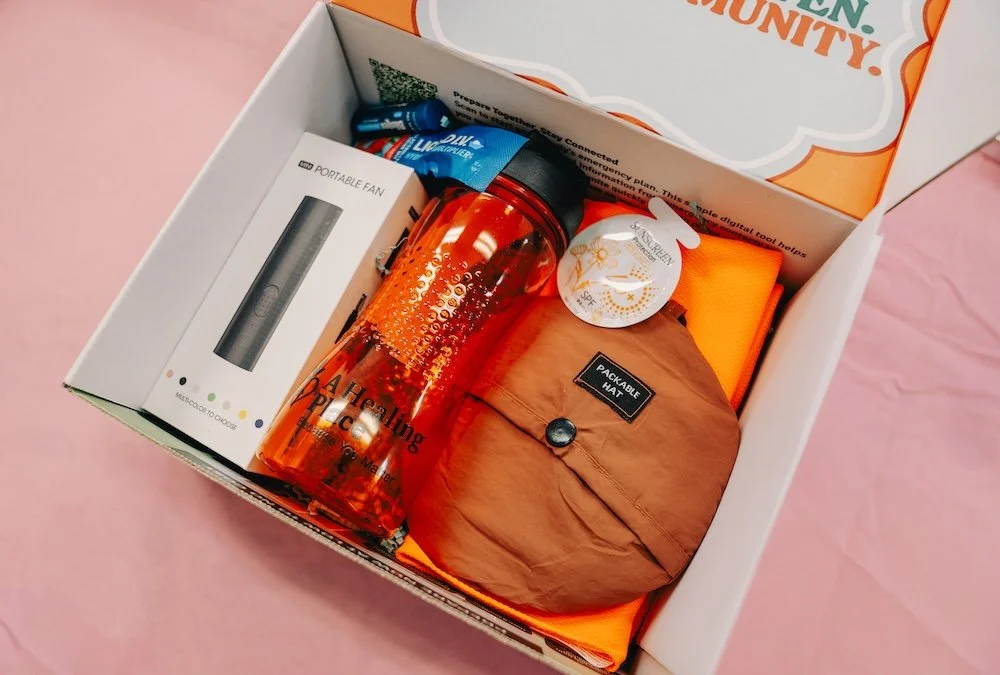
With a grant from the CO2 Foundation, Keshi was able to develop a series of community workshops that address flooding mitigation and extreme heat as well as provide participants with boxed kits filled with key supplies and messaging. For example, the Extreme Heat Kit includes lip balm, electrolyte packets, a water bottle, a portable USB fan and charger, sun screen, a sun hat, and a cooling towel. But perhaps the most important part of the kit is the messaging printed on the box: Preparation instructions, a QR code that takes people to digital tools, and the words Stay Cool. Hydrate Often. Build Community.
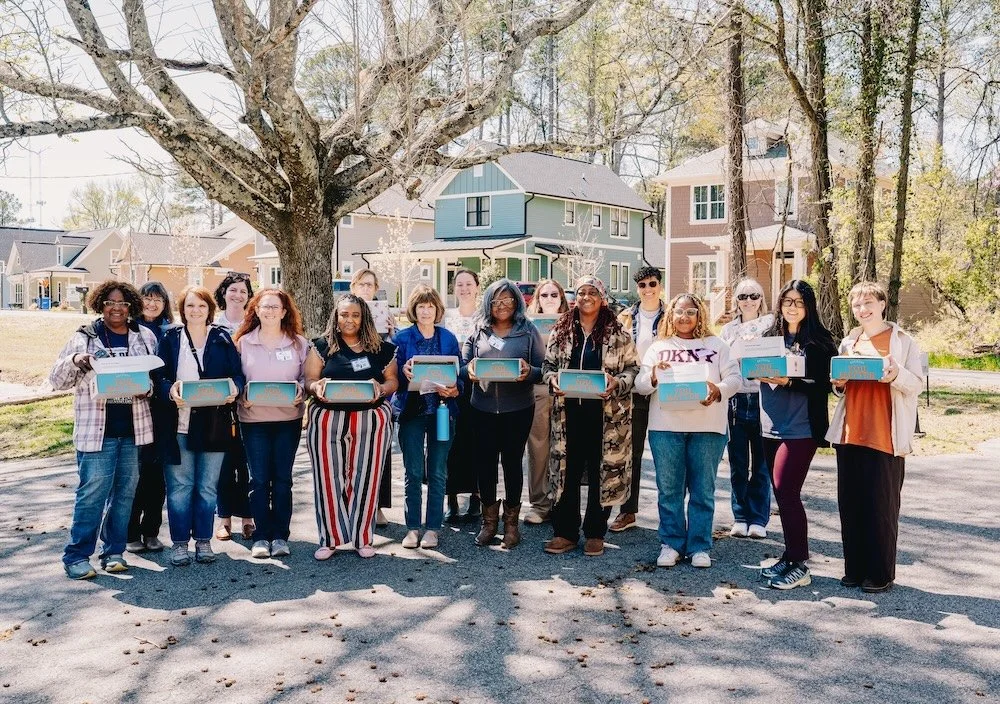
Keshi told how, at the end of the workshop series, she shuffled people outside for a group photo. Smiling participants lined up together and held their kits to reveal the message in the inner flap of the box: Because You Matter. The moment captured in the photo was so poignant that Keshi almost started crying.
She said, “I’m passionate about this. I had been working with homeless people, and what we were doing wasn’t good enough. We had to raise the bar. I want them to fully understand that you matter.”
Durham residents face a range of natural and human-caused disasters including flooding, shade inequity, heat, lack of housing , food insecurity, food deserts, hurricanes, tornados, tsunamis, wildfire, and ICE-related violence. Keshi has a lot of work to do to help her fellow citizens prepare. That work will be infused with empowerment of the people likely to be hardest hit by disaster to mitigate the effects, empowerment that comes from customized education as well as driving home the message that the people long left out of the conversation truly matter and need to be included and centered in that conversation from here on.
Keshi turned to Prepare Your Community to help her with this work. “I’m hoping it gives me the opportunity to elevate my own knowledge and interest in preparedness.” She added, “It gives me a space not to work in a silo, to collaborate with others, and to find out how others are working”
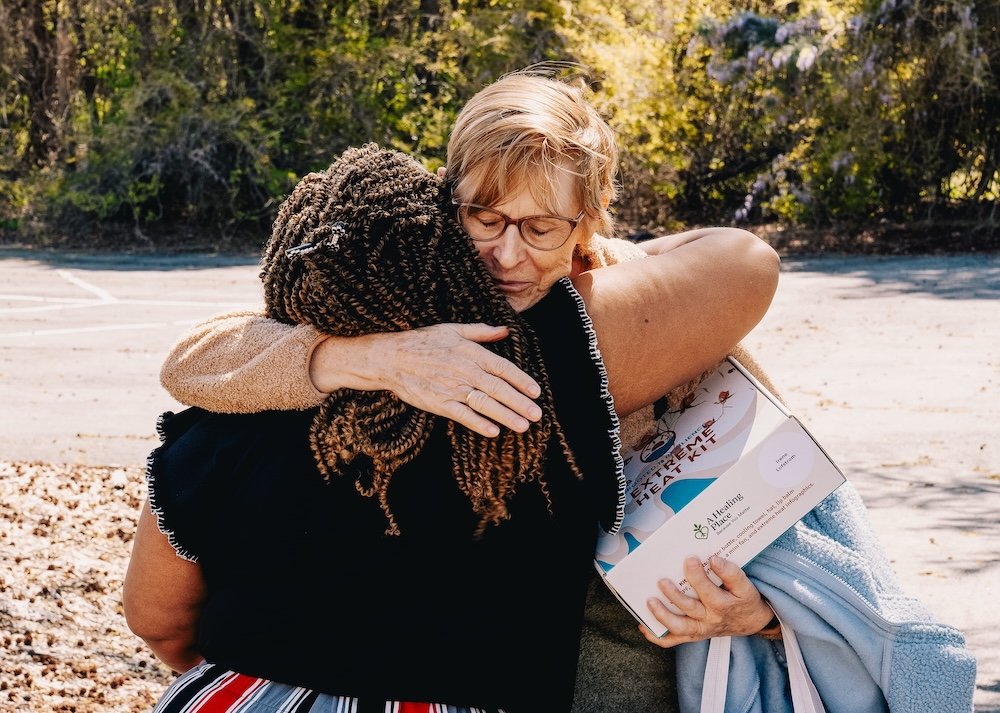
The PYC approach reflects Keshi’s sentiments and her organizational mission: Empowerment of residents and neighbors is at the foundation of our understanding of emergency readiness. Preparedness that operates exclusively from the top down furthers inequity because it never fully trickles down; people are always missed. But when you start with residents of a community and build up, you meet the federal, state, country, and local efforts in the middle with a solid base that can then fully and effectively implement the available resources.
Keshi said, “We’re stronger in numbers.” PYC brings people together via our digital platform to help them forge alliances and share knowledge, best practices, and experiential lessons so as to optimize effort. Keshi started out with her own experience of backyard flooding, joined forces with others to solve the problem, learned from shared experiences and knowledge, and then built something unique to address the specific needs of her community, including her own. These types of efforts—based on personal and shared experience—are the most effective because they involve widespread buy-in and participation and ensure that all voices are heard and all community members are served. PYC’s customizable materials are developed from a wealth of community knowledge shared by people all over North America in communities ranging from Pacific Northwest coastal towns to East Coast hamlets to densely-populated major cities.
As Keshi tells us, it’s “Because You Matter.” We all do, and when preparation efforts are built on that concept, they work better. A community isn’t prepared unless all its members are prepared.