
Prepare Your Community
Community Emergency Readiness Based on Compassion, not Fear
Our goal is to help communities across the nation prepare for disasters. We do that by providing recommendations at no charge to first responders, emergency managers, elected officials, and community champions.
We’re Good with Numbers
50K
volunteer hours
have generated our
best practices
14
communities so
far have adopted
our program
5
minutes is how
much time you need
to get started
$0
is what it
costs to get
recommendations
How We Can Help You
Our recommendation kits include:

Best Practices and
Planning Guides

Grant
Suggestions

Templates andSample
Documents
Gear & Supply Checklists
Standard Operating Procedures

Talking Points

Best Practices
and PlanningGuides
What’s the Catch?
There's no catch. We want to help. We have adopted a freemium business model, generating revenue through the consulting fees that some communities choose to pay to get additional support and guidance from us. This revenue stream enables us to give all other communities our recommendation kits free of charge.

Our Expertise
Our recommendations are based on the nearly fifteen years of experience of Bainbridge Prepares, an award-winning nonprofit serving the Bainbridge Island community, which is located across Puget Sound from Seattle, Washington, in earthquake and tsunami country.
What Makes Us Stand Out?
We operate out of compassion, not fear, which means that we approach emergency preparedness with eyes wide open and the ability to see, assess, and focus on the specific needs of the communities we serve. Our tried, tested, and refined recommendations to these communities are based on the fifteen years of experience of Bainbridge Prepares. They emphasize the power of volunteerism and a community approach through which people work together to achieve increased resilience.
This community approach extends to partnerships with and among organizations as well as up-the-stack strategies that integrate with federal and state agencies and down-the-stack strategies that work at the street and neighborhood levels. Our recommendations are also driven by practicality: Start with your strengths, start where the energy and personnel are, start with the biggest and most likely risks.
Sample Communities Adopting our Model
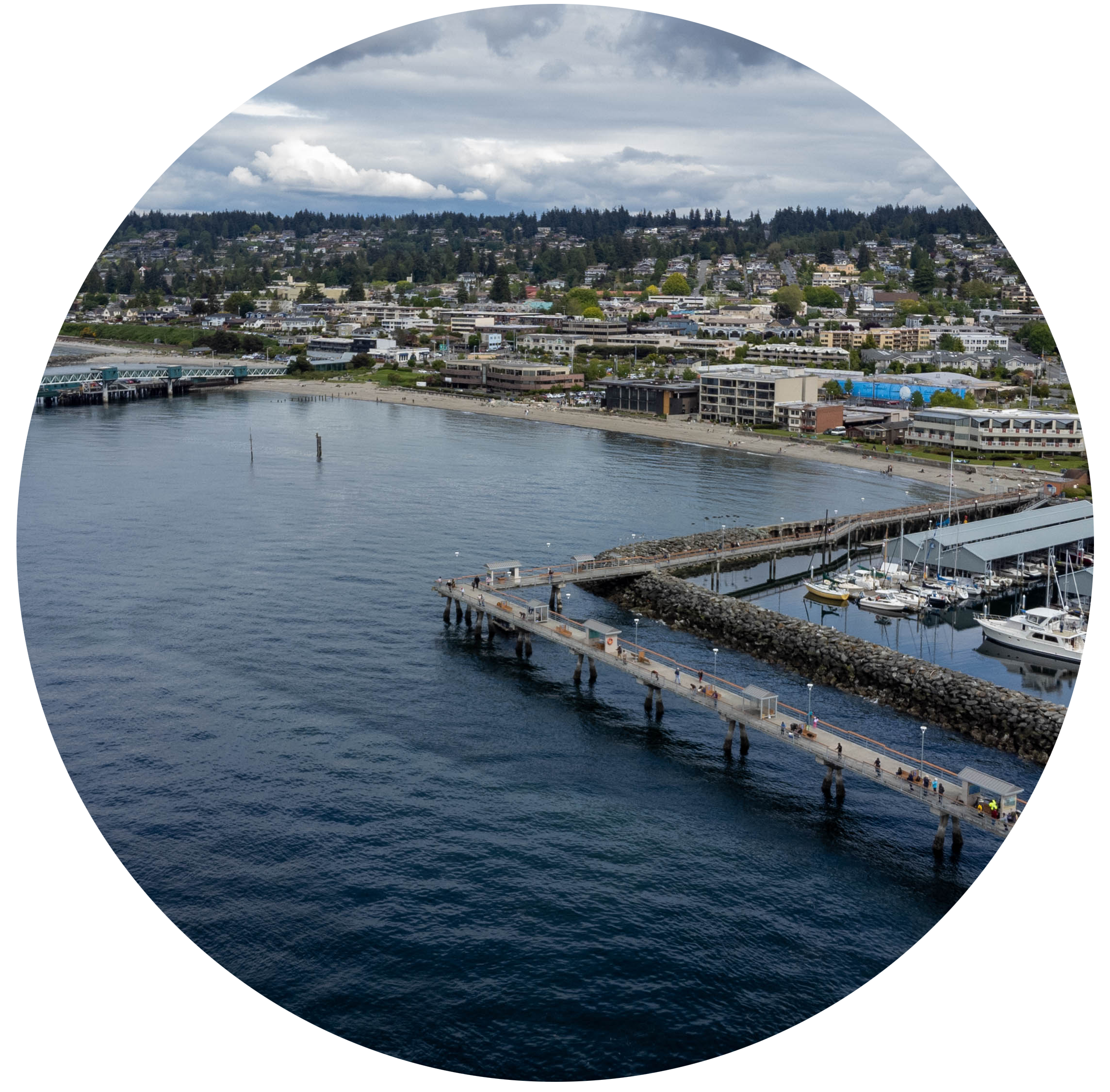
Edmonds, WA
"Connecting with PYC has greatly improved our knowledge and confidence for creating our own emergency preparedness program."
— Georgina Armstrong

South Whidbey Island, WA
"The PYC Model is just what we needed to organize ourselves with enthusiasm, commitment, curiosity and community care. It's contagious and so satisfying."
— Terra Anderson

Carmel-by-the-Sea, CA
"PYC has been an incredible asset to our community. Adapting their thoughtful, community-centered approach has helped us launch Carmel Prepares and bring our residents together around safety, resilience, and preparedness in a powerful way."
— Wanda Vollmer
South Whidbey Prepares is one of Prepare Your Community’s early adopters.
This powerful short film shows how South Whidbey residents are not only preparing for emergencies, but also enhancing their community:

What’s Your Situation?
Do you worry that in a disaster your community will be cut off from outside help?
Do you have volunteers in your community but no clear way to use them?
Are your elected officials, first responders, and community organizations all working independently on emergency prep?
Are you feeling overwhelmed and like you don’t know where to start?
Are you a community organizer frustrated that you can’t get traction on emergency prep with your community leaders?
Is your community ready to prepare but short on funding?
Don’t Worry! We Can Help.
Ready to Get Started?
Great! First, tell us your community role.

Resident
First
Responder
Emergency
Manager

Community
Champion

Elected
Official

Organizational
Leader
FAQs
-
As mentioned, our recommendation kits are free of charge. If you want additional guidance, you may hire us to consult with your community.
-
Our guidance comes from 15 years of experience with Bainbridge Prepares, an award-winning volunteer-based emergency preparedness organization, and best practices cultivated from dozens of other towns across North America.
-
Included in the recommendation kit are strategies and steps to take to implement a preparedness program. We will help you figure out where to start and how to proceed through the process.
-
Every community is different. If yours does not have an emergency preparedness effort in place, then anyone—an elected official, a community champion, a first responder, an emergency manager—can lead the effort to increase your community's resilience. Don't wait for someone else to do it. You can get the ball rolling.
-
Getting prepared is an ongoing process. You will always be working toward increased resilience. Getting started, however, takes no time at all.