

Introduction

Welcome! Whatever your role is in your community or how prepared your community is, you’ve made a great decision to visit this website.
The information we have prepared here is based on the more than 15 years of experience of the award-winning and nationally recognized Bainbridge Prepares nonprofit, the emergency readiness organization of Bainbridge Island, WA, with its 700+ credentialed volunteers in more than 20 teams.
Because every community is different and has its own unique needs, this material is scalable and customizable. You can fit it to where you live.
Where Do You Live?
Where you live is not like where everyone else lives. You might be in an urban, suburban, rurban, or rural area. You may live on a campus, in a village, in a township, in a campground, in a borough, on an island, in a mountain enclave, in a parish, on a base, in a town, or in a large city. Your community might have 70,000 residents or 250,000 or just 50.

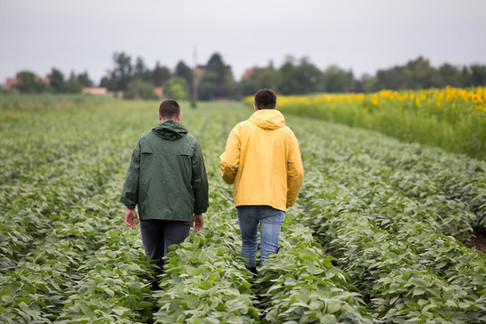


It doesn't matter where or what size. The principles and strategies we recommend here at Prepare Your Community can scale to any size area with any population.
But because there's so much variety in where people live, we need to agree on some common terminology that can cover all the bases and apply to anyone. To that end, there are four terms we will use over and over again, and they have relative meanings: Community, Neighborhood, Street, and Household.
Community
Draw an imaginary border around the area you are trying to prepare. It doesn't matter if it's a small rural town or a large city. It doesn't matter if it includes 10,000 apartment units or just 25 mobile homes. This border indicates what we will refer to as your Community. It is the largest unit you will be focusing on.
Household
The smallest unit is what we call a Household. A household might be a camper, an apartment, a townhouse, a cabin, a tent, or a two-story house. It doesn't matter what size it is or how many people live in it. It is the smallest descriptor of where you live.
Street
In between Household and Community are what we call Street and Neighborhood. Street refers to 15 to 20 Households in relative proximity. If you live in a rural area, a Street might consist of 12 farmhouses located 3 miles apart from each other. In an urban area, a Street might be an apartment building of 20 units or even just a single floor in a large apartment building.
Neighborhood
A Neighborhood is a cluster of Streets. It might refer, for example, to an entire mobile home park composed of multiple Streets and many mobile homes. Or it might refer to the borough of Queens, New York City.
The important thing to understand is that Household is the smallest unit in our structure and Community is the largest. You live in a Household. You live in close proximity to the other Households on your Street. Your Street is one of multiple to many Streets in a Neighborhood. And your Community is made up of multiple to many Neighborhoods.

If you're still confused about how this terminology applies to your specific area, click the button below to see some sample satellite maps of actual areas that we have marked with the Four Levels.
Organizational Principles
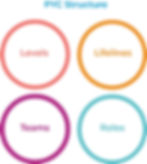
Now that we have that basic understanding of terminology, let's look at the four basic principles underlying the PYC structure.
Change Is Ongoing
The structure of PYC follows the basic structure of the Bainbridge Model™. It is important to note that that structure has changed a great deal over the 15 years of operation on Bainbridge Island as we have identified new needs, as community champions with specific interests have come and gone, and as we have learned from both our successes and failures. Your organization’s structure will likely also change as you grow and learn: In emergency preparedness, you never get to a place where you are finished. It’s an everchanging, ongoing process.
Households and Streets Are the Foundation
Our basic model consists of a foundation of household and street preparedness. If you start with those key elements, whatever you achieve communitywide will be stronger and more solid.
Upon that Household and Street foundation we built organized Neighborhoods with Disaster Hubs that operate post-disaster to help people with immediate needs.
At the top level of our model—the Community Level—is the readiness organization that you will create. It will provide a leadership structure; a connection with professional first responders, the community government, and the community emergency manager; and a set of emergency operations centers to meet the needs of the community after an emergency.
If you are experiencing pushback from your local government officials and emergency leaders at the Community Level, don't worry. Starting at the foundation and moving up will ensure that your efforts eventually garner support even at the top levels.

Partnerships Pave the Way
Anyone embarking on a preparedness journey is likely at least part of the time to feel overwhelmed. It is very difficult to take this journey alone. We recommend that, from the start, you bolster yourself by forming partnerships.
Look around your community. Who do you know? What organizations already exist? Think of businesses, churches, schools, grocery stores, community centers, your local Red Cross Chapter or Y. Approach the people behind these organizations with your concerns about preparedness. Invite them to join you as you ready your community.
As you get buy-in from people, you will see that their interests help shape the direction your readiness efforts take. They will infuse your efforts with energy and strengthen your cause.
Read more about Partnerships here.
One Size Does Not Fit All
The organization you create will not necessarily look exactly like Bainbridge Prepares. It will reflect the unique characteristics and needs of your community. Even the recommendations we offer here differ somewhat from the Bainbridge Model™. That is because what evolved on Bainbridge is not necessarily the most logical choice for all communities. A good example is the fact that on Bainbridge Island we have a Flotilla Team, crucial for an island community but not of much use to a community that is not anywhere near a large body of water.
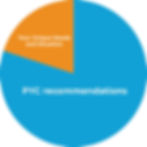
What we provide here is about 80 percent of what you need to prepare your community. The rest comes from you and depends on the particulars of where you live: your climate, demographics, terrain, region, infrastructure, specific needs, culture, environmental threats, and so on. By providing us with your zip code, we can help customize some of that additional information for you.
"Anytown" Prepares
You’ll choose a name for your community and a logo to represent and unify your leadership and volunteers. Some of the adopters of The Bainbridge Model™ have simply replaced the word Bainbridge with the name of their own communities. Examples are Carmel Prepares, Anderson Island Prepares, [add more examples]. You are welcome to follow this naming approach if you wish. But you can call your organization anything you want.
Throughout this website, for simplicity, we will refer to the community preparedness organization that you are starting as Anytown Prepares.
Detailed Structure
The recommendations we offer are comprehensive and may, as a result, seem daunting. Try to remember that whatever you do is better than doing nothing. Every day you work on this you will be taking important steps toward readiness and expanding your community’s resilience. You will never achieve complete readiness, a standard that is impossible to reach and impossible to define. Instead, work toward your goals by following the path we set out.
Levels
As already dicussed, our recommendations are organized according to four levels.
Household
Street (you and your neighbors)
Neighborhood (a collection of streets)
Community
Community Lifelines
In addition, we show you how to prepare your community in each of 9 categories of post-emergency needs. These are called Community Lifelines.
Water, Sanitation, Hygiene.
Hydration, waste management, personal sanitation, laundry, water used for cleaning wounds, water to wash dishes, and water used for food prep.
Food
Storage of an emergency food supply as well as the creation of renewable food supplies through gardening.
Communications
All the technology and protocols for communication.
Medical
Treating injuries and illness.
Energy
Ensuring that key technologies remain powered up.
Safety
Search and rescue, maintaining scene safety, and Personal Protection Equipment (PPE).
Transportation
Movement of resources including people.
Meeting Places
All the places where people will gather to check in, share information, and get or share resources.
Leadership
All the functions of maintaining and running your Anytown Prepares organization, management of Meeting Places, captainship of organized Streets, and partneriships with key community agencies and organizations, like Fire and the community government.
Teams
Most of the Lifelines are each supported by one team. For example, the Food Lifeline is supported by the Food Resilience Team. However, two special Lifelines—Meeting Places and Leadership—are complex enough that they need to be supported by multiple teams. For this reason, we recommend quite a few more than 9 teams to support the 9 Lifelines.
On Bainbridge Island, we created 20 different teams to support the 9 Lifelines. We encourage each community to form the teams that fit their unique needs and skill sets. You will probably start out with just a few teams. Over time, you may find that you need more or fewer than the 20 we currently have:
Access & Functional Needs (AFN)
Business Continuity
Child Safety & Reunification (CSR)
Communications
Community Emergency Response (CERT)
Damage Assessment
Disaster Hubs
Domestic Animal Care
Energy
Food
Interpretation
Logistics
Management
Medical Reserve Corps (MRC)
Outreach
Psychological First Aid (PFA)
Ready Your Street (RYS)
Transportation
Water, Sanitation, Hygiene (WASH)
Wellness for First Responders
Click on any team to learn more.
We provide key information on each team to help you build the ones you need or can create for Anytown Prepares in your community. You may not need all of these, and you may need some not listed here. You may need some in the future that you don’t need now. In addition, you may find that combining some of these teams into one works best for you.
Roles
We've targeted specific content to each of five different roles that may apply to you:
Community Champion
A Community Champion is someone who is actively involved in organizing their community to face disaster. This person is learning everything they can about the topic, pulling together people from different professional backgrounds and trying to build a preparedness organization to benefit the community.
Elected Official
An Elected Official is, for example, a councilmember, mayor, or alderperson who want to help develop a community-wide response to the threat of disaster. This person is part of local government and has access to top officials. They understand that creating buy-in from those other officials may be facilitated by starting with a bottom-up approach, strengthening Household and Streets.
Emergency Manager
An Emergency Manager is a person at the local or county level or working for an institution who is charged with preparing a specific population for disaster. This person may or may not have local government support and sees the benefits of starting wiht a bottom-up approach. Or this person believes that preparedness works from the top down and bottom up and wants to ensure the local population is resilient and temporarily self-sufficient as a large-scale disaster will deplete first responder resources.
First Responder
A First Responder is a firefighter, paramedic, or police officer worried about the likely depletion of official resoirces in an large-scale disaster. They want to help prepare the local population to be self-sufficient for a limited time until outside resources can reach the community to help.
Resident
A Resident is a person who lives in a community and want to prepare their own household and neighbors for disaster. They are not necessarily interested in organizing beyond the Street Level.
When we put together three of these organizational strategies—Levels, Lifelines, and Teams—they look like this:

Note that one team, Ready Your Street, doesn’t support a single Lifeline but instead operates at the foundational level by working to prepare Households and Streets.
When we add the Roles component, the structure looks like this:

Note that we have added Partnerships too. Read more about that here.
How to Use This Website
Work through the content any way you’d like. Pick one Level—such as Household—and investigate it in all Lifelines. Or you can start with a particular Lifeline and work through it at all four Levels. Alternatively, you might identify a specific Lifeline and investigate what Teams will help you meet that need. Or you may decide to begin with your specific Role.
Every Lifeline is supported by at least one Team. Every Team works to meet needs in at least one Lifeline. Every Lifeline spans all four Levels, and every Team supports work at all four Levels. Every Role connects to Teams, L:ifelines, and Levels.
There’s no wrong way to approach preparing your community. Do what makes most sense for you and the place you live.

5 First Steps
We've covered a lot so far, and we've barely begun! If you're like a lot of people, you might be feeling overwhelmed right about now. You might be feeling like you just want someone to tell you what to do. We have a solution for that. It's called 5 First Steps.

Imagine that you want to go on a trip through a specific region of the United States. A friend hands you a bunch of maps, a list of things you could see, and a list of great places you could stay. But you have to figure out your itinerary, where to start, what cities to visit, and what route to take. Now imagine that same friend hands you a single map showing a specific route to take. The route is annotated with a key showing where you will stay each night and what you will see during the day.
If you feel a sense of relief when the friend gives you the single marked route, then 5 First Steps is for you. This program will tell you exactly where to start and what to do over the first few years of your Anytown Prepares effort. By the time you get through these steps, you'll have a good sense of where and how to contunue your journey toward preparedness.
A Word of Encouragement
We did this at Bainbridge Prepares, but it took us a long time and we made many mistakes along the way. You can prepare your community too with your own Anytown Prepares, and you can avoid many of our mistakes and make great strides in a fraction of the time it took us simply by following our recommendations. Don’t get discouraged: It takes time. But everything you do, even just a small step, is better than doing nothing, and it takes you closer to your goal.
Getting started on just one Level, in only one Lifeline, through your Role, or with a single Team is worth celebrating. The steps you take will all lead in the right direction, toward preparedness.
Congratulations on taking that first step. Happy Preparing!
